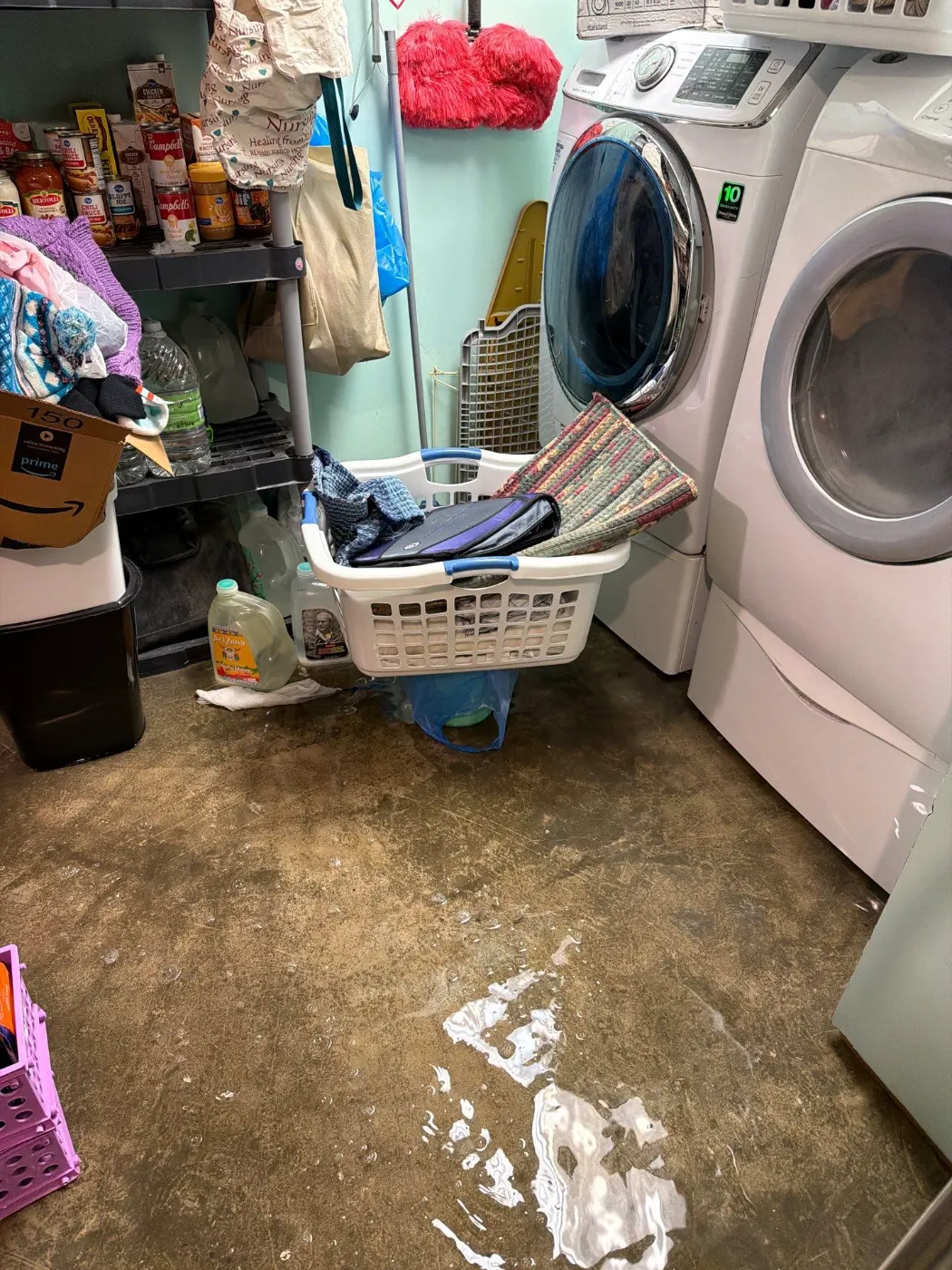
Round the Clock Water Cleanup in Eaton
When water is spreading through your Eaton home right now, Eaton Water Restoration delivers fast, around the clock emergency water damage restoration across Eaton and Delaware County. IICRC certified technicians handle the full job from extraction through reconstruction, and we coordinate directly with your insurance carrier.
A missed call gets returned within 15 minutes, even when we're busy with another homeowner.


Eaton Water Restoration is the Eaton, IN water damage restoration company homeowners call first: emergency water removal, structural drying, sewage cleanup, and mold prevention, available 24/7 with insurance coordination on approved claims. Call (812) 515-1567.
- Services: water damage restoration, basement flooding, sewage cleanup, storm damage
- Service area: Eaton, Delaware County, IN and surrounding areas
- Response time: Same day for Eaton inquiries; 24/7 emergency service available
- Licensed and insured (License #RC21100059)
- Serving Eaton, IN since 2018
Schedule Your Free Damage Assessment
Our inspection on an Eaton water loss starts with a room by room walkthrough, measuring walls at multiple heights with non penetrating meters, checking baseboards and trim, probing subfloors, and pulling insulation in any cavity that reads suspect. We look behind cabinets and appliances, under sinks, around water heaters and washing machines, and along basement perimeter walls and slab joints where water tracks before it shows. Thermal imaging maps hidden moisture the eye cannot see, penetrating meters confirm the readings, and a hygrometer logs ambient conditions in the affected space. Thorough mapping matters because the most expensive failure in water restoration is missed moisture that fuels mold growth thirty days after the visible damage is gone, which is exactly what we work to prevent in every Eaton home we inspect.
I agree to be contacted by Eaton Water Restoration regarding my inquiry.
Sewage backup cleanup in Eaton is a health emergency, not a mop job. Category 3 water carries bacteria into flooring, drywall, and anything porous it touches, and Indiana humidity gives contamination a head start. Proper containment, removal, and sanitizing has to begin the day it happens.
Category matters. Clean supply water, gray water from appliances, and black water from sewage each carry different protocols under industry standards. Certified Eaton technicians classify the loss first because everything after, what's saved, what's removed, what's sanitized, depends on it.
Water damage restoration near Eaton is a crowded search result. The filter that works: who answers now, who shows readings, who writes scopes, and who local homeowners actually recommend. Apply it to everyone, including us.
Payment Options That Work for You
Insurance settlements rarely arrive on the same day damage happens. Financing bridges the gap so your home gets restored on your timeline.
Pay for your project at a later time, but lock in today's pricing. Ideal for homeowners waiting on insurance settlements.
- No payments for 12 months
- No interest if paid in full
- Lock in current pricing today
Divide your project cost equally across 12 months with zero interest. Most homeowners choose this option for predictable budgeting.
- Equal monthly payments
- 0% interest for 12 months
- Simple, predictable budgeting
Spread your investment over up to 20 years with fixed equal payments. The right choice for larger projects or homeowners who prefer lower monthly amounts.
- Up to 20-year terms available
- Fixed equal payments
- Ideal for larger restoration projects
Subject to credit approval. Ask your project lead for current terms and promotions.
How We Handle Eaton Water Damage Restoration
Each service page below explains what the work involves in your Eaton home and what to expect from the crew.
Water Damage Restoration in Eaton
Full scope residential water damage restoration covering extraction, structural drying, moisture verification, and reconstruction to pre loss condition for Eaton homes.
Learn moreBasement Flooding in Eaton
For Eaton addresses, basement water extraction and structural drying for finished and unfinished basements, including sump pump failures, foundation seepage, and storm driven groundwater intrusion.
Learn moreSewage Cleanup in Eaton
Serving Eaton: category 3 sewage backup cleanup with full containment, contaminated material removal, antimicrobial treatment, and verified decontamination per IICRC S520 protocols.
Learn moreStorm Damage in Eaton
Water intrusion restoration following storm events, including wind driven rain, hail driven moisture, ice dam leaks, and flooding from severe weather across Eaton.
Learn moreCommercial Water Restoration in Eaton
For Eaton addresses, commercial water damage restoration for offices, retail spaces, and multi tenant buildings, with extraction and drying sized for larger square footage and faster business reopening.
Learn moreCommercial Flood Damage Cleanup in Eaton
For Eaton addresses, commercial flood cleanup for storm and groundwater flooding events, including extraction, decontamination, and structural drying for commercial properties.
Learn moreCommercial Sewage Cleanup in Eaton
Serving Eaton: commercial sewage backup remediation for restaurants, offices, and facilities, with full containment, biohazard disposal, and antimicrobial treatment to S520 standard.
Learn moreCommercial Mold Remediation in Eaton
For Eaton addresses, commercial mold remediation per IICRC S520, including containment, HEPA filtration, contaminated material removal, and post remediation verification.
Learn moreCommercial Storm Damage in Eaton
In Eaton, commercial storm damage restoration for water intrusion through compromised building envelopes, with rapid mitigation to limit business interruption.
Learn more
Local Expertise, Real Results
Trust is built one documented moisture reading at a time, not claimed in a tagline.
If you live in Eaton and you have water somewhere it should not be, Eaton Water Restoration is the local crew that handles it from dispatch through reconstruction. License #RC21100059, IICRC trained, fully insured, and on call 24 hours a day across Eaton and Delaware County.
Eaton Water Restoration serves Eaton homeowners and the surrounding Delaware County communities including Muncie, Albany, Gaston, and Daleville, dispatching crews throughout the Eaton service area for residential and commercial water losses. Our restoration work covers everything from a single room supply line break to whole basement flooding along the Mississinewa River corridor. The crew is built around IICRC certified technicians on a licensed and insured team, with experience handling the older housing stock that defines much of Eaton. We answer the phone day or night because water damage does not wait for business hours, and the homeowner on the other end usually needs to hear a calm voice with a clear next step.
Every job we run in Eaton follows the IICRC S500 standard for water damage restoration, with S520 protocols layered in any time mold remediation enters the scope. That means an initial moisture assessment using thermal imaging and penetrating meters, controlled extraction matched to the Category of water present, structural drying with monitored airflow and dehumidification, and antimicrobial application where contamination warrants it. We verify dry standard with logged readings before reconstruction begins, not before. The technical rigor exists because shortcuts at the drying phase show up six months later as warped flooring, peeling paint, or mold inside a wall cavity, and that bill is always larger than the original loss.
Our Promise
Our commitment to Eaton homeowners comes down to three things. First, fast emergency response dispatched day or night, because every hour without extraction expands the damage. Second, IICRC certified technicians trained to the S500 standard, handling Category 1, 2, and 3 losses with the protocol each requires. Third, a free on site inspection before any work is authorized, and full coordination with your insurance carrier if you have an active claim. Plain communication, documented work, and a crew that treats your home the way it should be treated.
What Water Restoration Done Right Looks Like in Eaton
IICRC certified technicians, documented moisture verification, and a clear scope before any work begins, that is the standard we hold ourselves to on every Eaton job.
Around the Clock Emergency Response
Water damage in Eaton does not schedule itself for business hours. Our 24/7 emergency line connects you to dispatch any time of day or night, with crews and equipment ready to roll. Fast response matters because mold begins colonizing within 24 to 48 hours of saturation, and insurance carriers expect prompt mitigation.
IICRC Certified to S500
Our technicians are IICRC certified and work to the S500 standard for water damage restoration, with S520 protocols applied for any mold remediation. In practice that means proper Category determination, documented moisture readings, and drying verified against dry standard before reconstruction. Certification is the difference between guessing and knowing.
One Crew Mitigation Through Rebuild
Most Eaton water damage jobs need more than drying. We handle the full scope, extraction, structural drying, demolition where required, and reconstruction including drywall, flooring, paint, and trim. That keeps your project on one schedule instead of waiting on a second contractor to start the rebuild weeks later.
Insurance Coordination Done Right
We work with your insurance carrier throughout the claim, documenting damage with photos, logging moisture readings, and writing scope that matches coverage. Most major insurance carriers expect IICRC-standard documentation, and that is what we provide. You focus on your family, we handle the paperwork side with your adjuster.
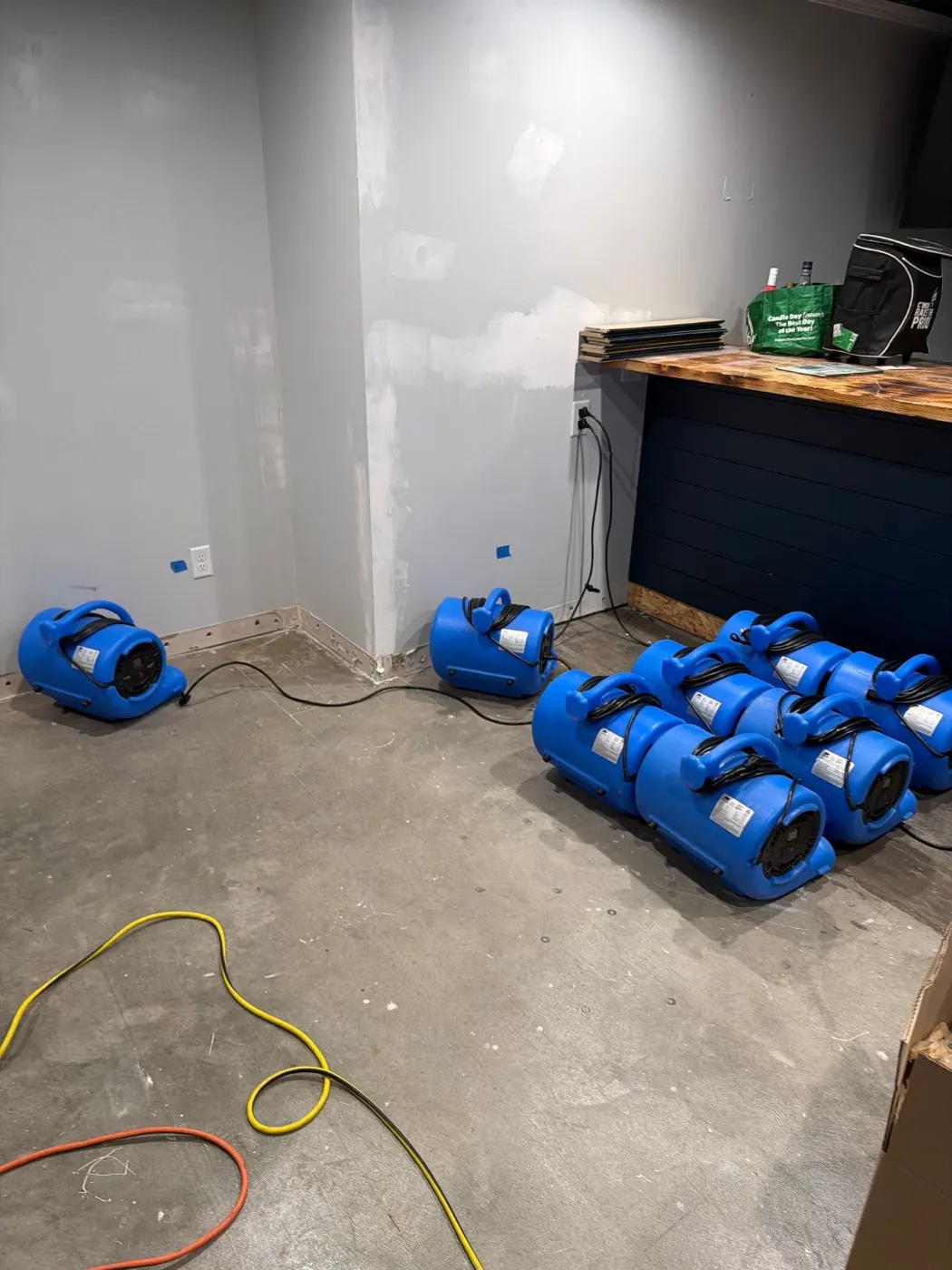
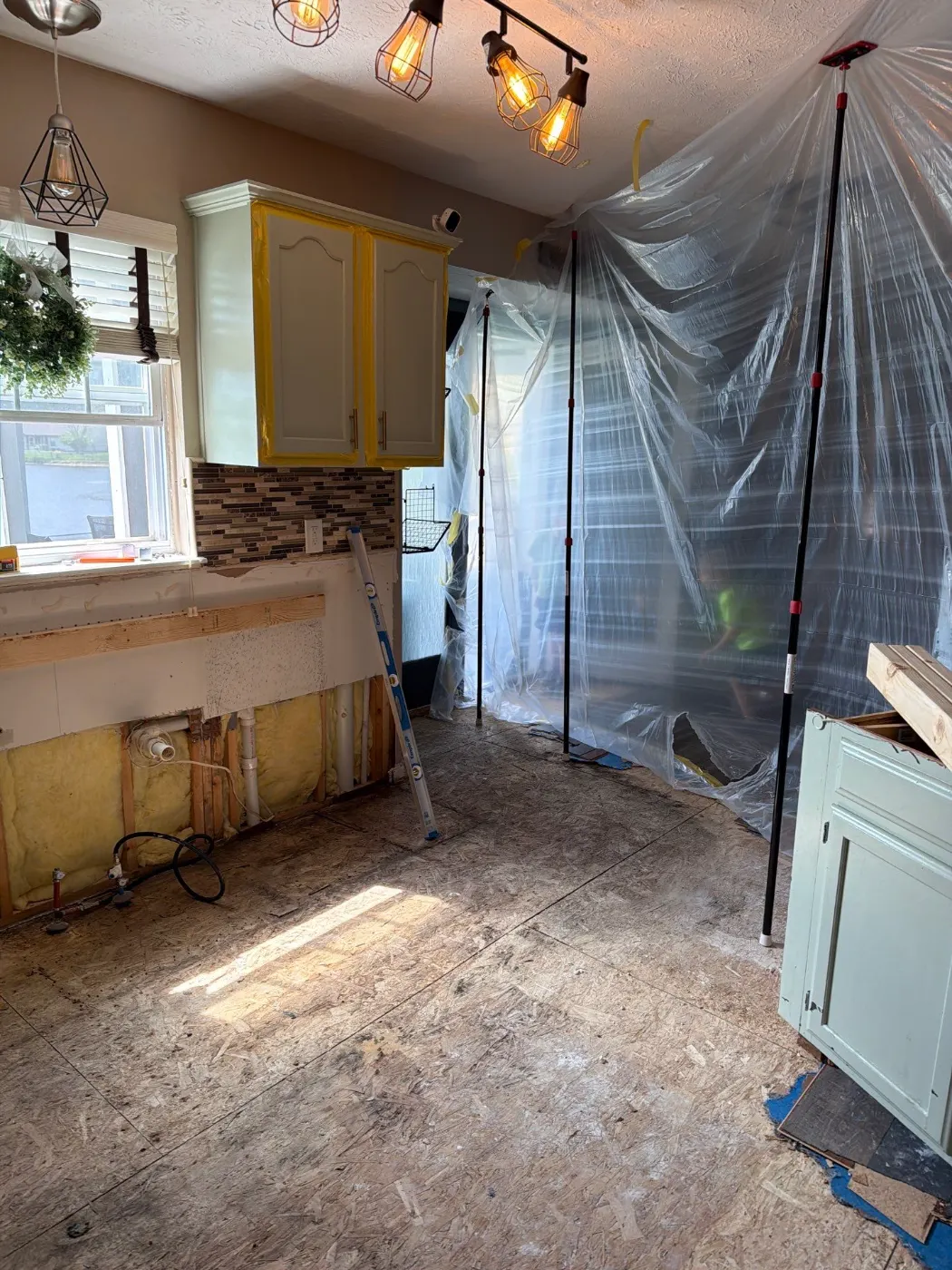
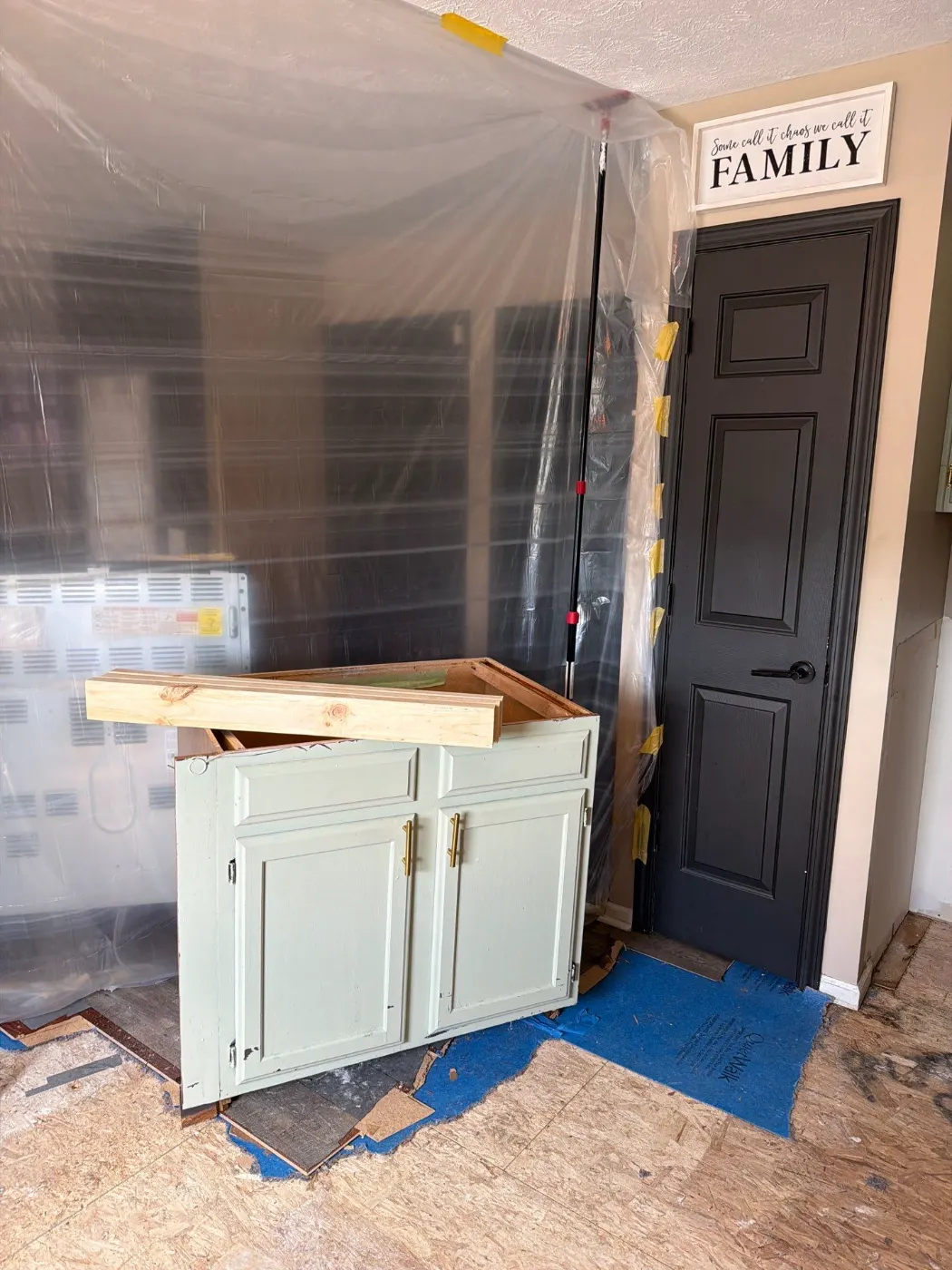
Real Jobs. Real Results.
Recent water damage restoration jobs completed across Eaton and Delaware County, including basement flooding, burst pipe losses, sewage backups, and storm driven water intrusion.


Four Steps to a Dry Eaton Home
Phase one on any Eaton water loss is assessment. We walk the property, run thermal imaging across affected and adjacent spaces, take penetrating meter readings, and identify the source, whether that is a broken supply line, an appliance failure, sewage backup, or storm intrusion through a compromised opening. Water gets classified as Category 1, 2, or 3 per IICRC S500, because the Category dictates everything that follows. Scope of damage is mapped before a single piece of drying equipment goes in. This phase typically takes one to two hours depending on the size of the loss.
Phase two is documentation and insurance coordination. Before any mitigation begins, we photograph and video every affected area, log meter readings on a written moisture map, and contact your insurance adjuster directly to align scope with coverage. Mitigation justification gets documented to industry standard, which is what carriers require to process the claim cleanly. Most Eaton homeowners never see the paperwork side of this, we handle it directly with the carrier. The result is fewer disputes, faster approvals, and a clear record of what was found and what was done.
Phase three is drying execution and reconstruction. Air movers and commercial dehumidifiers are placed per structural drying calculations sized to the affected square footage, with daily monitoring and logged readings until materials hit dry standard matched against unaffected areas of the home. Controlled demolition happens only where materials cannot be saved. Then reconstruction begins, drywall, insulation, flooring, paint, trim, returning the home to pre loss condition. We see the job through from the first extraction pass to the final walk through.
Rapid Dispatch to Eaton
When the call comes in, the truck loads with commercial water extraction equipment, dehumidifiers, air movers, thermal imaging, and meters. A certified technician leads the crew on site for assessment and immediate stabilization. Fast dispatch limits the spread before structural materials saturate further.
Category Determination per S500
Every loss gets classified as Category 1, 2, or 3 under IICRC S500 protocol. Meter readings are logged, the source is identified, and a written assessment defines scope. The Category controls PPE, containment, demolition, and disposal requirements, so we get it right before any work proceeds.
Insurance Carrier Partnership
We coordinate with your insurance carrier from the first inspection forward, documenting damage to industry standard and writing scope matched to your policy. Invoicing stays transparent, and there is no scope creep without your sign off. You stay informed at every step of the claim.
Drying to Verified Standard
Drying continues with daily monitoring and logged moisture readings until affected materials match the moisture content of unaffected materials in the home. Reconstruction does not start until structures are confirmed dry. That verification step is what prevents callbacks six months later.
Top Causes of Eaton Water Emergencies
Eaton homes typically call us about these six water damage scenarios.
Foundation and Groundwater Intrusion
After heavy Delaware County rains, groundwater pressure rises around foundations. Eaton homes with compromised foundation seals or aging waterproofing see seepage and intrusion into basements.
Burst Supply Lines
Indiana winters drop below freezing for weeks at a time. Eaton homes with poorly insulated supply lines see pipes freeze, expand, and burst. The damage shows up when the thaw begins and water starts flowing.
Slab Leak Under the Floor
Water under a slab has to surface somewhere, and it comes up at the perimeter, at expansion joints, and through flooring adhesive. Carpet at the wall goes damp, wood cups, and the base of the drywall wicks it up from below.
Ice Dam Meltwater in the Wall
That ice on the gutter is the symptom. The cause is warm air leaking into the attic and melting snow that should have stayed frozen. Removing the dam stops today's water; air sealing the ceiling plane is what stops next winter's.
Sump Pump Failure
Sump pump failures in Eaton typically happen at the worst times: during heavy spring rains, in the middle of the night, or after long periods of disuse. The result is the same: water rising in the basement.
Dishwasher Leak Under the Cabinet
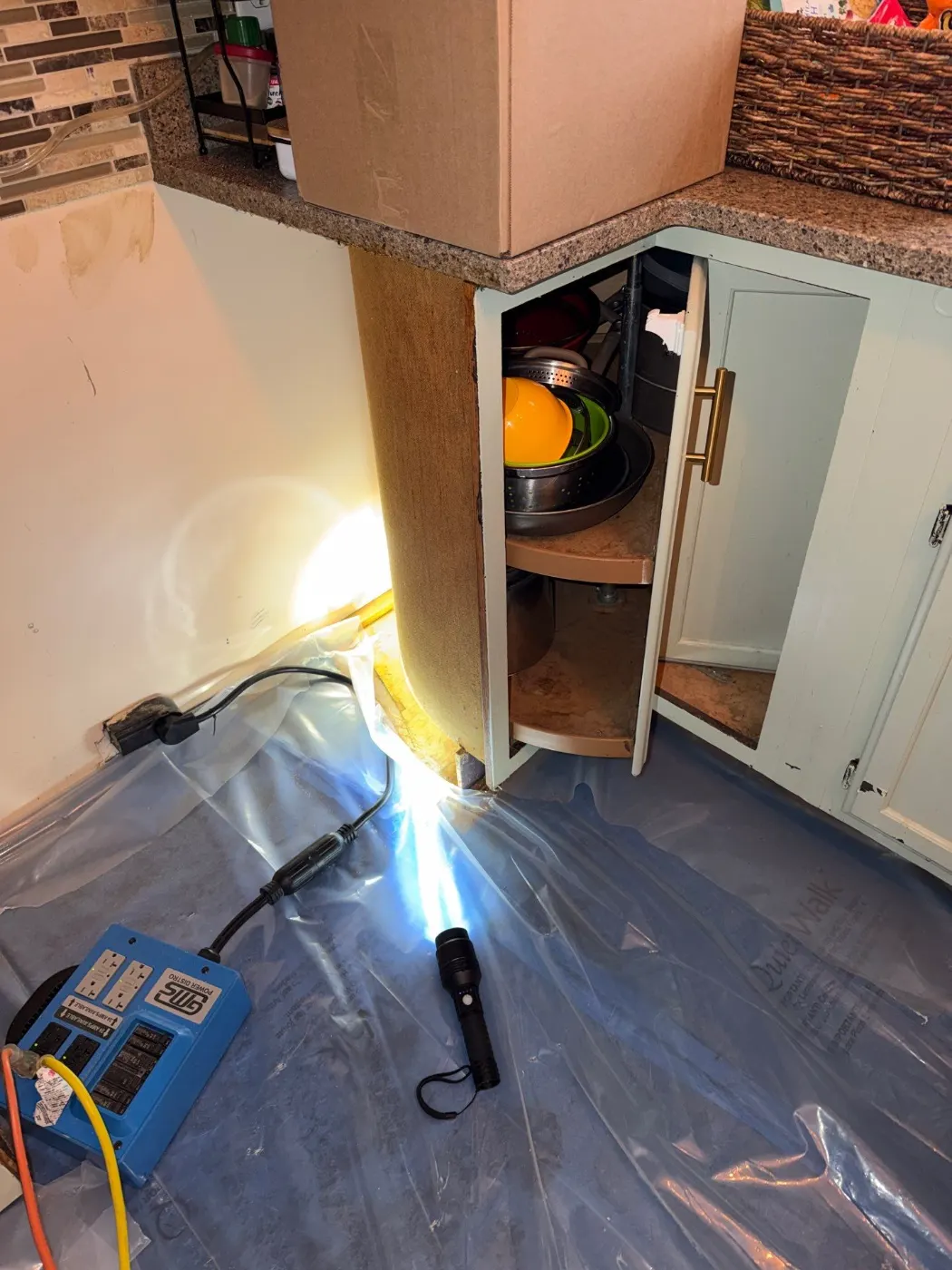
Pull the machine out and the story is written on the floor: a rust ring at the fitting, swollen particleboard, and a dark line where water ran toward the sink base. All of that gets photographed before demolition so the cause and the timeline stay in the file.
What Homeowners in Eaton Should Do in the First Hour After a Leak
Most of what helps in the first hour is simple. Shut off the source and stay clear of anything electrical that got wet, then work through the rest of this list while our crew heads your way.
1. Stop the source
For a toilet or a washing machine, close the small shutoff valve behind it. If the leak is bigger, or you can't tell where it starts, close the main valve for the whole house and leave it off until our crew checks the source.
2. Unplug what you can reach safely
If a lamp or a space heater is plugged in near the water and the floor around it is still dry, unplug it and carry it to a dry room. Leave anything that's sitting in water exactly where it is for the crew.
3. Keep kids and pets out of dirty water
If a toilet or floor drain backed up, treat that water as dirty and keep children and pets away from it. Wear rubber boots and gloves if you have to walk through it, and wash your hands well afterward.
4. Clear a path for the crew
Our crew will need to reach the wet walls and floors, so move small items out of the affected rooms when it's safe to do it. Leave heavy furniture where it is until the crew arrives.
5. Lift furniture off wet carpet
Slide aluminum foil or plastic lids under the legs of wood furniture so stains don't bleed into the carpet. Pull up throw rugs and hang them somewhere dry, since they hold water against the floor underneath.
6. Leave wet drywall and carpet in place
It's tempting to start pulling things out, but leave wet drywall and carpet where they are. Our crew takes the damage photos and moisture readings before anything is removed, and that record goes into your photo report.
7. Let the air reach wet spots
In rooms with clean water, open closet and cabinet doors so air reaches the wet spots. On a hot, sticky day, keep the windows closed and leave the air conditioning on, since it pulls moisture out of the air.
8. Make the call early
Waiting until morning gives the water all night to soak into floors and walls. Our line is open 24/7, so call once the water is shut off and everyone is safe.
Once the water is off and everyone is somewhere dry, call us and we'll get a crew headed to your Eaton home with the extraction and drying equipment on the truck.
Three Simple Steps
Every job starts with a phone call and ends with readings that show the house is dry.
First Response
Emergency intake takes minutes, and a crew is dispatched within 2 hours. Arriving fast is how a flood stays a repair. Everything from extraction to containment is already staged.
The Paper Trail
We handle the back end paperwork so you handle your household. Thermal cameras find the cold signatures that evaporating water leaves behind. This phase usually runs one to two hours.
The Rebuild Phase
Dry standard in 3 to 5 days is typical for Eaton, and the readings confirm it. Done means demonstrated. The wet gets removed, the structure gets dried, the home gets rebuilt.
How You Get a Clear Record of the Water Damage in Your Eaton Home
Before any drywall comes out or any equipment goes in, our crew photographs the damage and takes moisture readings. Those become your photo report, which we keep adding to until your house is dry.
The source, in pictures
Whether it was a cracked pipe or a sump pump that quit, the first photos in the report show the source up close and in the context of the room around it. That helps your plumber see the same thing we saw.
Moisture readings, room by room
Each affected room gets readings at several spots on the walls and floor. The report lists those readings with photos of where they were taken, so you can see where the wet area ends.
Photos of every affected room
The crew photographs each affected room before anything is moved or removed, then again as the work moves along. You'll see the same corner of the same room on the first day and on the last.
What can dry where it is
Some materials can be dried right where they are, and some have to come out. The report shows which is which, with the readings behind each call, so you understand why a section of drywall or flooring is being removed.
Updates as the work goes
Drying takes several days in most homes, and the report grows the whole time. New readings and photos get added on each visit, so you always know where things stand in each room.
We walk you through it
Once the first readings are in, we sit down with you and go through the report in plain language. You can see what's going on inside your walls from your living room and ask about anything that doesn't make sense.
Sharing the report
The report is yours to share with anyone you choose. We document damage with a photo report and walk you through what we found, so you can decide with your insurance company, and your own policy spells out what it covers.
You keep your copy of the photo report after the job, so file it with your other home records once the drying is done.
Questions Worth Asking Before Work Starts in Eaton
Ask any restoration company in Eaton these questions before you sign a work authorization.
What happens if you find mold?
Ask how mold behind walls or under floors gets handled, and whether that work is priced apart from the drying.
Who handles repairs after drying?
Ask who replaces drywall, flooring, paint and trim once the structure is dry, and whether one company can do both stages.
Who will be working in my home?
Ask whether the crew works for the company you called or for a subcontractor, and who's in charge on site each day.
How will you show me it's dry?
Ask for moisture readings on the first visit and the last one, so you can see the numbers reach dry standard.
Can I see an itemized estimate?
Ask for every line item in writing. Many insurers price water losses in Xactimate, so an estimate in that format is easier for an adjuster to review.
Does my policy require a certain company?
Ask your adjuster before you sign anything, and read the work authorization so you know what you're agreeing to.
Indiana Weather Drives Restoration Calls Year Round
Indiana weather drives a steady share of the water damage calls we run in Eaton. Spring rain saturates ground along the Mississinewa River corridor and pushes water into basements; winter cold snaps in the teens burst supply lines in uninsulated crawl spaces; summer thunderstorms send wind driven rain through any opening the envelope offers.
Spring Saturation Flooding
Eaton sits along the Mississinewa River, and spring snowmelt combined with heavy rain regularly pushes the river toward flood stage. Saturated soil drives groundwater through foundation walls, overwhelms sump pumps, and floods basements across the older housing stock. When called in, we extract, dry the structure, and treat for contamination if river water entered the home.
Winter Pipe Bursts
Delaware County January lows average around 17 degrees, and the older galvanized and copper plumbing common in Eaton homes is vulnerable when crawl spaces or exterior walls lack adequate insulation. A burst supply line at 2 AM can release hundreds of gallons before anyone notices. We extract, dry, and rebuild after the plumber makes the repair.
Severe Thunderstorm Intrusion
East central Indiana sits in a severe thunderstorm corridor, with heavy rain and hail driving water through any compromised opening. Wind driven rain finds its way around windows, through soffit gaps, and into attics, then tracks down wall cavities. Our crews map the moisture path with thermal imaging and dry from the inside out.
Ice Dam and Freeze-Thaw Leaks
Indiana freeze thaw cycles create ice dams that back water under roofing materials and into Eaton attics and ceilings. The leak often shows as a stain on a bedroom ceiling weeks after the storm. We trace the moisture source, contain the affected materials, and dry the assembly before mold sets in.
Every Eaton Neighborhood, Every Water Risk
Open any neighborhood to see what our crew looks for in those Eaton homes when water shows up.
Where we respond near Eaton
We send crews to Eaton around the clock, along with the towns closest to it.
What We Have Learned Working in Eaton
What Eaton homes tend to need after water damage.
About Eaton Homes
The median year a home was built in Eaton is 1951, and over 37% of housing units were built before 1940, reflecting the town's rapid growth following its 1873 incorporation and the late-19th century Indiana Gas Boom. Homes from this era and through the mid-20th century were predominantly plumbed with galvanized steel pipes, with copper becoming common in post-WWII construction and PEX largely absent except in the small fraction of homes built or fully rehabbed after 2000. Eaton's housing stock is dominated by older single family detached homes ranging from late-19th century farmhouses and craftsman bungalows to mid century ranch style homes, with compact in town lots that predate the automobile era. Full basements are common in the pre-1960 stock given Indiana construction norms, and the minimal post-2000 construction (under 3% of units) means slab on grade homes are rare; crawl spaces and full basements remain the norm.
Where We Work in Eaton
We cover homeowners across Eaton near Danny Howard Memorial Park (Tarinna Morris Field), Norsemen Park, Eaton Elementary School, Delta High School, Delta Middle School, Eaton Public Library, State Road 3 (main corridor), Riverbend Depot.
Surrounding Areas We Serve
Our crew also covers Muncie, Hartford City, Albany, Gaston, Daleville, Royerton.
Recent Weather Patterns
Eaton sits along the Mississinewa River, which is subject to recurring flood warnings issued by the National Weather Service, with the river monitored for flood stage events particularly during spring snowmelt and heavy rainfall periods. Delaware County and east central Indiana more broadly sit within severe thunderstorm watch corridors that regularly affect the region with heavy rain, hail driven water intrusion, and periodic ice storms, consistent with Indiana's documented pattern of multi hazard winter and spring weather events.
What Our Crew Sees in Eaton
Eaton's position along the Mississinewa River creates genuine flood plain proximity risk for properties near the river corridor, and the town's pre-1960 housing majority means galvanized plumbing failures and aged sewer laterals are a persistent water damage driver. Delaware County's freeze thaw cycle,with January lows averaging around 17°F,puts older homes with inadequate insulation or unheated crawl spaces at real risk for burst pipes each winter. With nearly 4% of housing units lacking complete plumbing as of recent surveys and a high share of homes exceeding 50,70 years of age, sump pump dependency in full basements and aged municipal sewer lines compound the water intrusion and backup risk across much of the town's residential core.
The Eaton Area
Eaton has approximately 1,595,1,630 residents across roughly 661 households, with a median household income ranging from approximately $45,000,$54,500 depending on the data year, placing it modestly below the Indiana state median. The community is predominantly working class and owner occupied (roughly 70,74% homeownership rate), with family households and a median age in the mid to upper 30s.
What Happens on a Water Loss in Eaton
What a homeowner in Eaton can expect at each stage of the job.
Emergency response on a Category 1 or Category 2 loss in Eaton starts the moment the truck arrives. Onboard equipment includes commercial water extraction units, commercial dehumidifiers sized to the affected square footage, professional air movers, moisture meters, and thermal imaging cameras. Extraction begins promptly, and structural drying setup is completed the same day in most cases. Daily monitoring follows with logged readings until materials confirm dry. Throughout the job, work zones are contained, unaffected areas get plastic protection, and we communicate clearly day by day on what to expect. Most Eaton homeowners want two things during a water loss, a crew that knows what they are doing and clear updates on the timeline. That is what this phase delivers, and it sets up everything that follows.
Specialized containment applies when the loss involves Category 3 water, sewage backup, floodwater, or long stagnant water carrying biological contamination, and any mold remediation falling under IICRC S520. Containment is built with 6-mil plastic barriers floor to ceiling, sealed entry points, and negative air machines pulling contained air through HEPA filtration before exhausting outside the work zone. Technicians wear full PPE per S520, Tyvek suits, N95 or P100 respirators, nitrile gloves, and eye protection. Contaminated porous materials are cut, bagged, and disposed of according to protocol. Antimicrobial is applied to remaining structure, and post remediation verification with air sampling is performed when warranted. This is the phase where IICRC certification matters most, because corner cutting here causes the long term health problems that show up after the job is supposedly done.
Reconstruction completes the restoration cycle. The same crew that performed extraction and drying rebuilds the affected areas, drywall hung, taped, mudded, sanded, primed, and painted; flooring replaced whether carpet and pad, vinyl plank, hardwood refinish, or tile reset; baseboards and trim reinstalled or replaced; cabinetry repaired or replaced; doors rehung; and electrical and plumbing finish work coordinated with the trades that handled the source repair. One project manager stays on the file from the first call through the final walk through, with one schedule and one final invoice tied to the original claim. The alternative most homeowners experience is a handoff to a separate general contractor after drying, two crews, two schedules, two billing cycles, and gaps where the home sits in demolition waiting for the rebuild crew to become available.
What Happens During the Days Your Eaton Home Is Drying
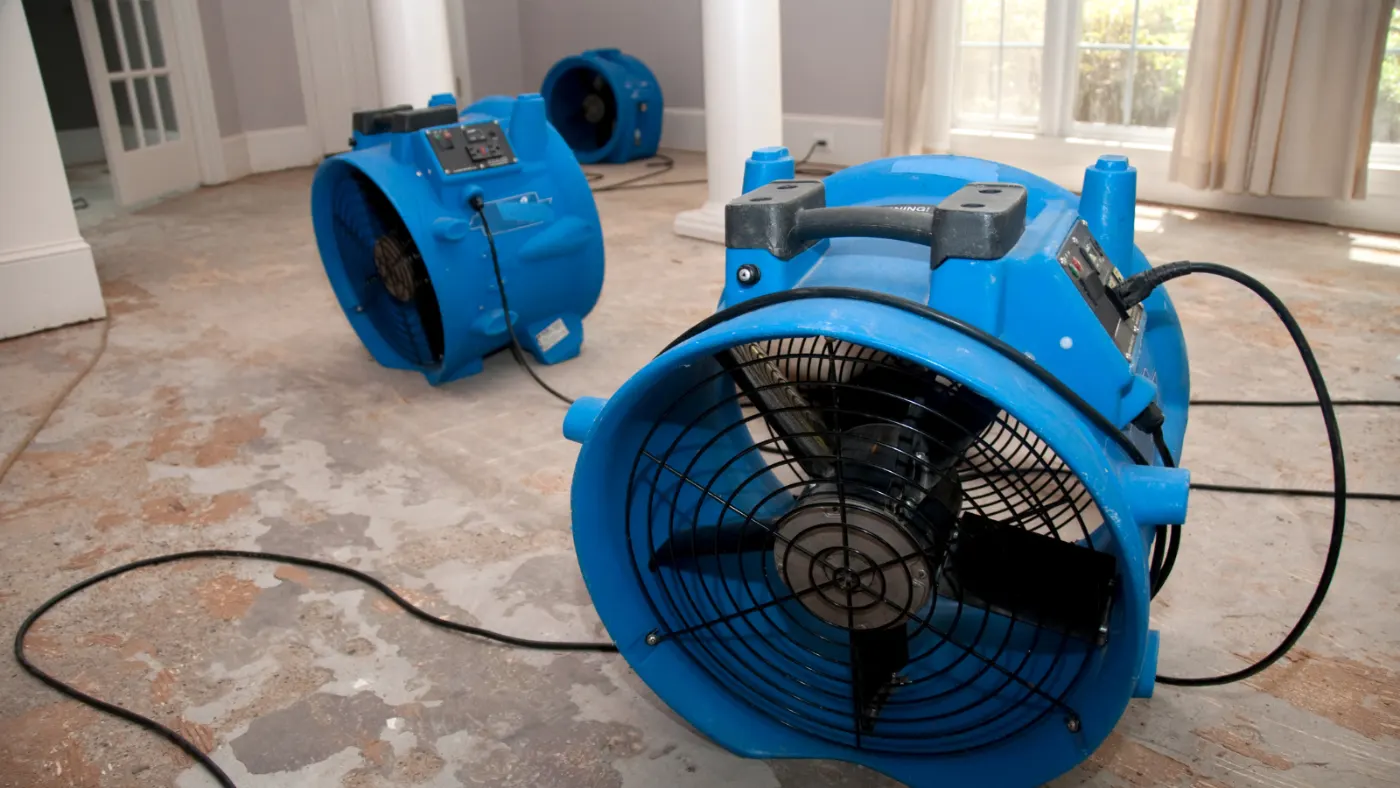
For a few days you'll share your home with fans and dehumidifiers running in the rooms that got wet, and you can keep using the rest of the house. The crew plans the setup around how you live there, and these notes cover what helps the drying move along.
Expect steady noise
Air movers sound like strong box fans, and dehumidifiers add a low hum. A closed door between a bedroom and the equipment helps at night, and the crew can sometimes angle a unit away from a bedroom wall if the noise carries.
Leave the settings to the crew
Most units have their own switch or a small control panel. The crew sets those for your rooms, so leave them as they are and let the crew make changes on their next visit.
Closed doors help
When the crew closes off a room, the equipment dries a smaller space faster. Keep those doors shut as much as you can, and pass through quickly when you need to get in.
The equipment uses a lot of power
Drying equipment draws a steady load, so the crew spreads it across different circuits. If a breaker trips, reset it once, and call us if it trips again so the crew can move a unit.
Safe paths through the house
Equipment and cords can turn a familiar hallway into a tripping spot, especially at night. Leave a light on along the path you use most, and keep small kids away from the units while they run.
Let the crew in each day
The daily check takes a short while, and it decides when the equipment can come out. Plan for someone to be home, or work out a time with the crew so they can get to the wet rooms.
Keeping moisture down
EPA puts it this way: the key to mold control is moisture control. In practice that means drying your home quickly and keeping the humidity down once the equipment is gone.
Finishing the dry out
Drying wraps up room by room, so some units may leave before others. When the last readings come back dry, the crew removes the rest of the equipment and walks the house with you.
When the last readings come back dry, we'll go over the photo report with you and plan any repairs your home needs.
Water damage response pricing in Eaton
Final pricing on any Eaton water damage job depends on Category, affected square footage, and reconstruction scope, which is why we provide a free on site inspection before authorizing work. The ranges below reflect typical residential losses in the Eaton market, not estimates for your specific property.
What Eaton Homeowners Probably Want to Know
Quick answers for Eaton homeowners who just found water on a floor or coming through a ceiling.
Expert Eaton Restoration Crews Available Now
If water is spreading through your Eaton home right now, or you suspect hidden moisture from a recent storm, call for fast emergency dispatch. Free on site inspection, no obligation, and we work directly with your insurance carrier to keep the claim moving.